Last updated: 2026-10-23
Fifteen informational interview questions below are arranged for job seekers who need a referral, not just a pleasant chat. They run in the order of a 20-minute call: questions that decode the role come first, then career-path intel, then the referral ask, softest first. A question made the list only if its answer gives you a resume keyword, an entry route or a next contact. If you keep only one, keep "Who else should I talk to?" It ends the call on a next step. The referral ask is worth the nerve: of every 10 job seekers who got a referral, 4 were interviewed and 1 was hired, in a 2024 analysis of 1.1 million referrals on one vendor's referral platform, as reported by SHRM [1]. If the call is already booked, skip the request advice and start with the role questions.
Before you ask: how to request, prepare for, and time the conversation
Ask for a short, fixed slot, such as twenty minutes, and name that length in your request. We recommend it because a short, fixed ask is easier to accept than an open-ended "pick your brain" coffee. When the time is up, offer to end the call.
- Find the right person. Look for someone a level or two above the role you're applying for, at a company on your list. A shared school or past employer on LinkedIn is the warmest way in.
- Send a short request. A LinkedIn connection note or cold email needs three things: who you are, why you picked them, and the twenty-minute ask. Leave out your resume and any mention of a referral.
- Suggest phone or video. Meet in person only if they offer.
- Give two time windows. Let them choose.
- Spend ten minutes on research. Read their profile, the company's latest news and the posting you're targeting.
- Write your questions down. Then cut the ones a search could answer.
Questions that decode the role
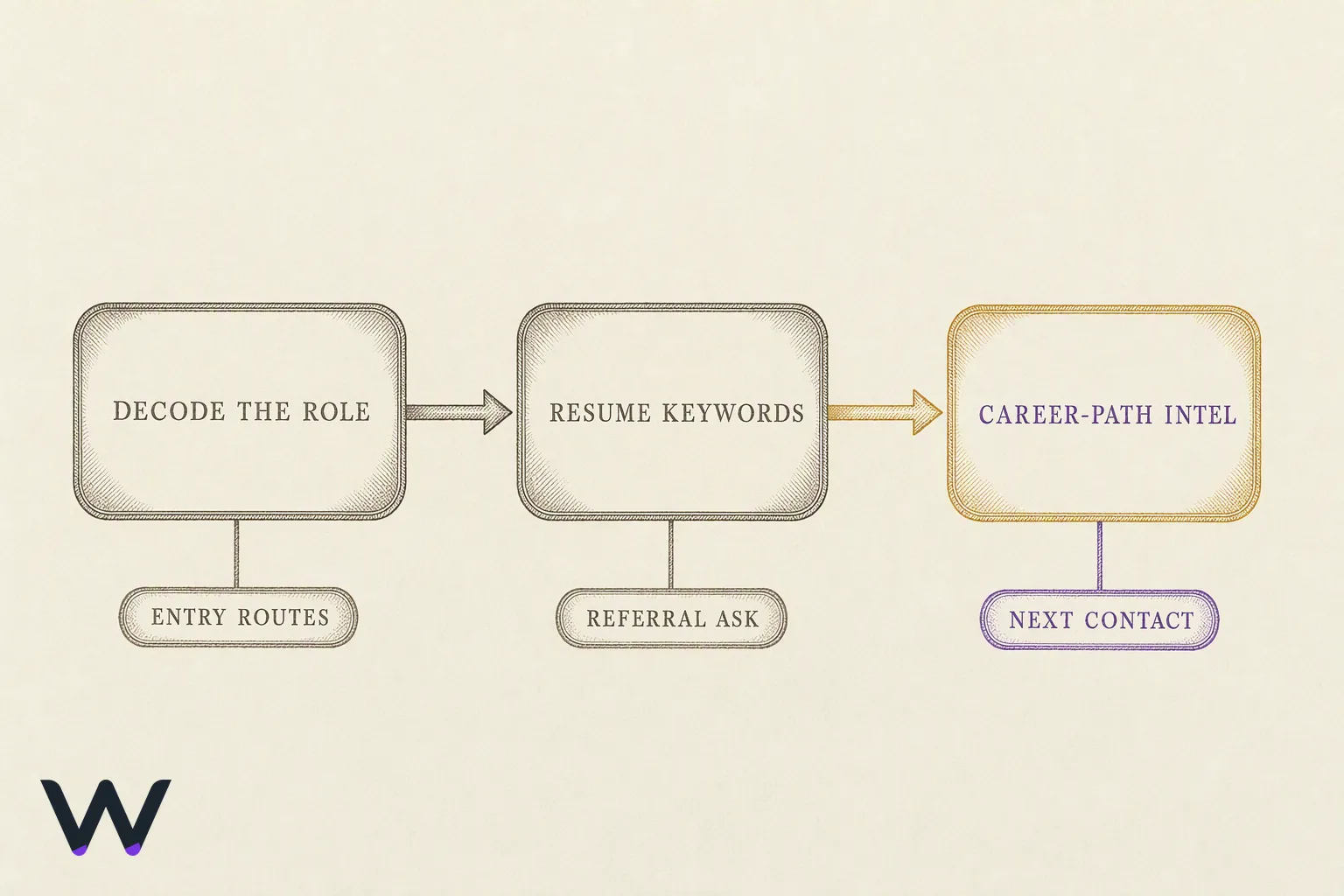
These five informational interview questions show what the job looks like from the inside. Write down the exact words they use, because those words are your resume keywords.
What does a typical week look like in this position?
Purpose: shows how much of the work is actually spent on each duty in the posting.
How is success measured in the first three months?
Purpose: tells you what the role really expects, so you can lead with matching results.
Which skills do you use every day?
Purpose: separates the skills that matter from the padding in the posting.
Which listed qualifications matter less than they sound?
Purpose: shows you where to spend fewer resume lines.
What makes a candidate stand out for this job?
Purpose: shows the hiring bar in the team's own words.
If they say "stakeholder updates" and your resume says "communication," change yours to match. Our guide to choosing skills to put on a resume shows how to rewrite those lines for each application.
Questions that surface honest career-path intel
What did your path into this role look like?
Purpose: shows which entry routes actually work in this field.
How do people usually move up from here?
Purpose: tells you whether the career path is real or only on paper.
What happens when priorities clash on the team?
Purpose: shows the company culture better than any values page.
How does hiring actually work here?
Purpose: tells you who screens, who decides, and whether referrals get noticed.
What do you wish you'd known before joining?
Purpose: the most candid answer usually comes here.
Change the questions to fit the field. On a hospital clinical path, ask which certifications and unit rotations lead to promotion. On a SaaS sales path, ask what an Account Executive has to show before moving up.
Judge the answers by how specific they are. A specific answer names a title, a timeline or a person. "Everyone grows at their own pace" names nothing. Ask a follow-up.
Questions that earn a referral or introduction
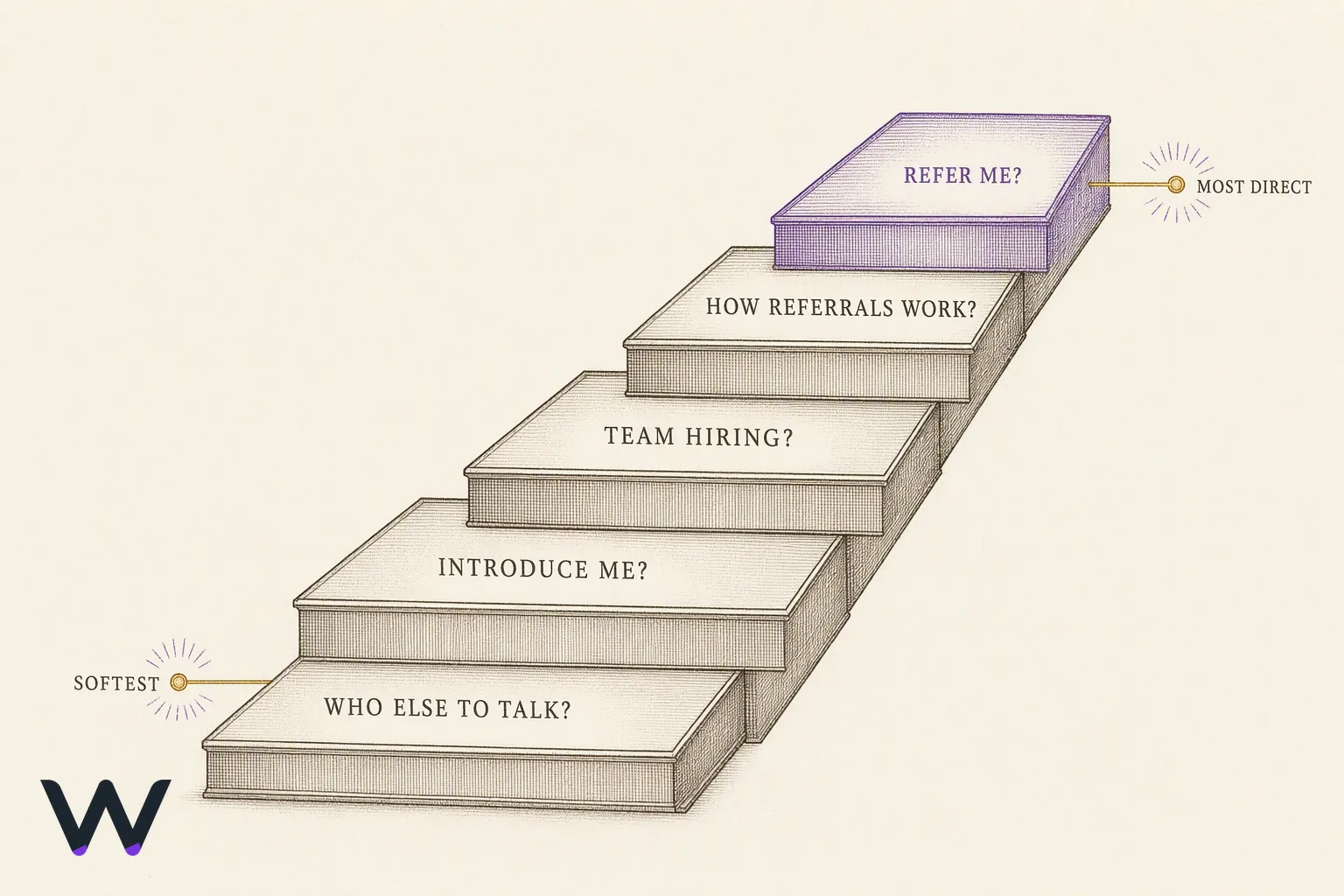
That 1-in-10 referral hire rate compares with job boards, where companies "often need over 50-60 applicants per hire" [1]. The job-board figure is a rule of thumb rather than data from the same dataset, so treat the gap as a rough guide, not a measured ratio. The gap is still wide enough to justify ending every call with these questions, softest first.
Who else should I talk to about this field?
Purpose: grows your network with no pressure on them.
Would you be comfortable introducing me to them?
Purpose: turns a name into a warm introduction.
Is your team hiring, or expecting to?
Purpose: tells you about openings before they're posted.
How do referrals work at your company?
Purpose: lets them explain the process before you ask them to use it.
Would you be comfortable referring me for the open role?
Purpose: the direct ask. Use it only if the conversation went well.
If they say yes, send a three-line summary of your fit within a day so they can forward it as is.
Topics to avoid, and what to do if the role seems wrong for you
Leave three topics off a first call: salary, a direct "can you get me a job" request, and anything personal or confidential about the company. Each one turns an informational chat into a job interview the contact never agreed to run. Watch for one warning sign: a contact who cannot describe what a normal week in the role looks like. When that happens, ask how the team defines the job and how success is judged before you decide whether to pursue it. If the role sounds wrong, say "This helped me rule something out." Then ask who else you should know.
Note-taking, thank-you notes and follow-up after the call
Write down four things during the call, then take two steps after it:
- Names: every person, team or company the contact mentions.
- Terms: the exact phrases they used for the work. Reuse them in your applications.
- Promised introductions: who, and who sends the first message.
- Contact preference: ask whether LinkedIn or email suits them, then thank them [2].
- Thank-you note: Binghamton University's career center advises sending a follow-up thank-you message after the conversation [2]. We suggest sending it the same day. These follow up email templates show what to include.
- One follow-up: if an introduction stalls, nudge once, then stop.
Take ten minutes after the call to note what changed your view of the role. With almost no network, start with your school's alumni directory and second-degree LinkedIn connections at target companies. One shared link warms a cold request.
Frequently asked questions
How long should an informational interview last?
An informational interview should last as long as you named in the request. We suggest asking for about twenty minutes. Keep to it. As the agreed end nears, say "I want to respect your time" and let the contact decide whether to keep going. A short call that ends with a named introduction beats a long one that ends with nothing.
What are the 3 C's of interviewing?
None of the sources behind this guide defines the 3 C's, so check the definition used by whoever mentions the term. For an informational interview, one idea matters most: compatibility. In a job interview, the employer judges you. In an informational interview, you do the judging, so ask whether the team, the pace and the work suit you.
What are the 7 most common interview questions?
None of the sources behind this guide ranks job interview questions, so this answer is not a ranking. In an informational interview you ask the questions. Even so, we recommend preparing short answers to a few openers the contact may turn back on you, such as "Tell me about yourself", why you want the role, and what you would bring to the team.
Which informational interview questions to ask first
Ask two questions about the role and one about career paths, then close with "Who else should I talk to?" That order fits a twenty-minute call. It also ends on a next step. This week, send three requests that each name the role you're applying for.
References
- Majority of Employee Referrals Made During Work Hours — shrm.org
- Networking Questions & Outreach Templates for Students: Employers, Alumni, Grad School & More — binghamton.edu

Stop applying. Start interviewing.
- ✓Wobo finds matching roles and applies for you
- ✓Tailored resume, cover letter and answers included
- ✓You focus on interviews, we handle applications