Did you know that 40% of LinkedIn users have outdated resumes sitting in their profiles?
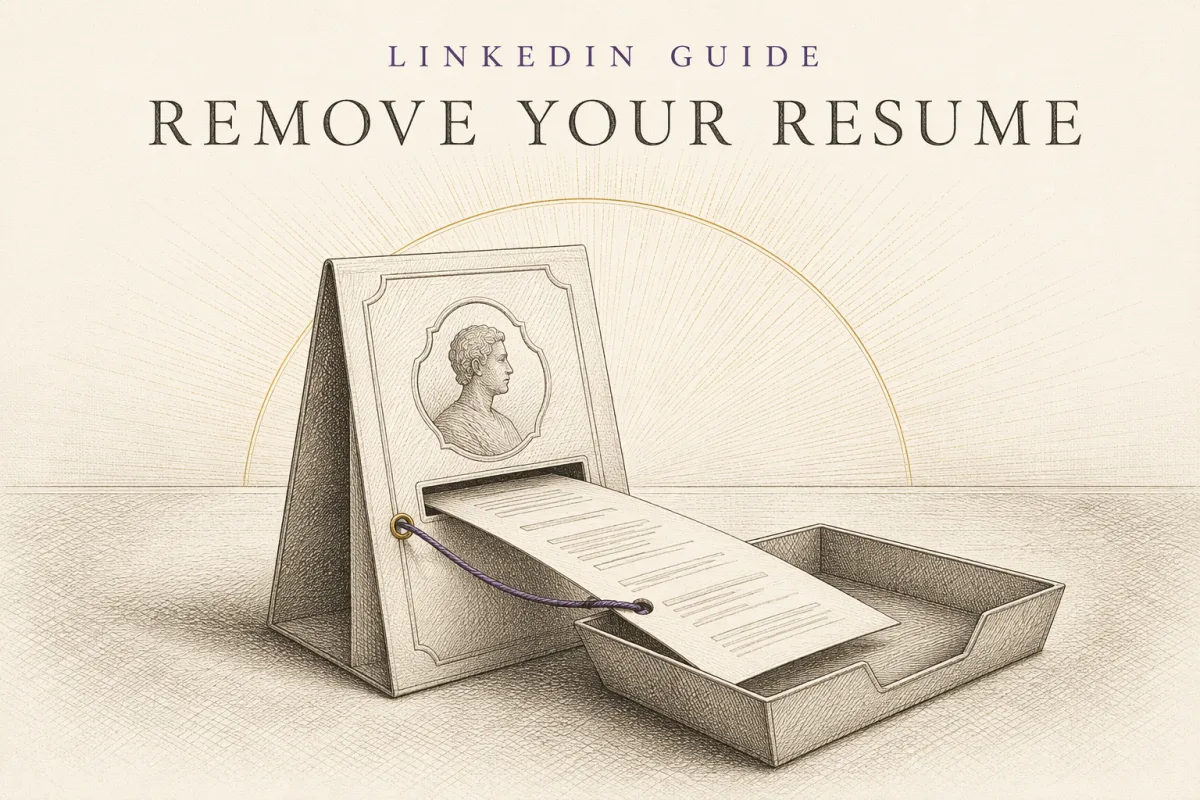
Outdated resumes can send the wrong message to potential employers and connections, especially when they don’t match your current profile information. Many professionals find it challenging to maintain their LinkedIn presence effectively. This becomes even more apparent when you have to remove old resume files.
You might want to update your professional image, remove outdated information, or declutter your profile. Learning to delete a resume from LinkedIn is a crucial skill. If your current resume needs a refresh before re-uploading, an AI Resume Builder can help you create a polished, up-to-date version in minutes. The process may seem daunting initially, but anyone can manage their LinkedIn resume files with the right guidance.
In this piece, you’ll learn the complete process to remove resumes from LinkedIn. We’ll cover everything from simple deletion steps to handling multiple uploaded files. Let’s make your LinkedIn profile shine!
Preparing for Resume Removal
LinkedIn profile changes need proper preparation to ensure a smooth transition. Statistics reveal that 78% of recruiters rely on LinkedIn to find and research candidates . This makes a strategic approach to profile modifications vital.
Users need to decide between a temporary hide or permanent deletion of their resume. A temporary hide keeps all profile data private while preserving information. This option works well for people who might restart their job search later. If you're gearing up for a new search, our AI job search guide can help you get started on the right foot. Permanent deletion removes the resume and associated files from LinkedIn’s servers and provides improved privacy protection .
Several steps deserve attention before deleting your resume:
- Back up all LinkedIn data to preserve professional history
- Review current profile information for accuracy
- Ensure other profile sections are complete and up-to-date
- Download a PDF version of the current profile
- Save copies of any resumes currently uploaded
Once you have your backup, you might also want to review your resume content. Our guide on how to use a resume fixer can help you identify areas for improvement before your next upload. LinkedIn implements specific measures to protect user privacy, especially when you have recruiters from current employers. The platform automatically hides resume information from LinkedIn Recruiter users who work at the same company listed as current on a user’s profile [1].
If you're unsure whether your resume needs updating or replacing entirely, understanding the difference between a CV and a resume can help you decide what to upload next. Data protection concerns are common, but previously submitted job applications remain unaffected by resume removal [1]. Users can proceed with deletion while keeping their application history intact.
Step-by-Step Resume Deletion Process
LinkedIn will give you two simple ways to delete your resumes from the platform. Each option works differently based on where you’ve stored your resume .
Method 1: Removing Resume from Featured Section
- Click your profile photo in the top-right corner
- Select ’View Profile’ from the dropdown
- Scroll down to the ’Featured’ section on your profile
- Click the pencil (edit) icon on the Featured section header
- Find your resume, click the three dots (…) or trash icon
- Select ‘Delete’ and confirm when prompted
Method 2: Deleting from Job Applications
- Click your profile photo and go to ‘Settings & Privacy’
- Navigate to ’Data Privacy’ → ’Job seeking preferences’ → ’Job application settings’
- Find your saved resumes in this section
- Click the three dots (...) next to your resume
- Select ’Delete’ from the options
- Confirm your choice to remove

LinkedIn lets you store up to four recent resumes used in job applications. If you're replacing an old resume, make sure your new one includes a strong resume summary that reflects your current career goals . You can adjust your privacy settings through Settings & Privacy → Data Privacy → Job seeking preferences → Job application settings to stop automatic resume storage during future applications.
Note that deleting a resume from the Featured section doesn’t affect your previously submitted job applications . Your application history stays intact while you update your profile.
Advanced Resume Deletion Techniques
LinkedIn users can gain better control over their resume management with advanced techniques that handle multiple versions and privacy settings.
The Easy Apply feature saves your last four resumes used in job applications automatically . You can manage these saved resumes in your privacy settings with these simple steps:
- Click your profile photo and go to ‘Settings & Privacy’
- Navigate to ‘Data Privacy’ → ‘Job seeking preferences’ → ‘Job application settings’
- Find the “Save uploaded resumes“ toggle
- Switch off the feature to delete all saved resumes
- Click confirm when asked
The Resume Builder feature gives you more control to delete privately saved resumes you might use in future job proposals . This tool keeps your profile clean while tracking different resume versions for job applications. When creating those versions, keeping them ATS-friendly ensures they perform well in both LinkedIn applications and external job portals.
The Featured Section gives professionals precise control over resume visibility. Removing resumes from this section won’t affect your stored application documents . Your public documents can be removed while your application history stays intact. Once your profile is cleaned up, an AI Job Application Bot can streamline your next round of applications across multiple platforms.
Your Job Settings controls are available through the Account & Privacy portal. These settings help you manage how your professional history shows up in job applications . This feature works great when you need different resume versions for various industries while keeping a clean profile. Not sure how detailed each version should be? Our guide on how long a resume should be by industry breaks it down by industry and experience level.
Troubleshooting Common Deletion Issues
LinkedIn users sometimes face technical problems while trying to delete their resumes, even though it should be a simple process. A good understanding of common problems and their fixes helps keep your professional profile current.
Many users notice their deleted resumes still show up on their profiles. This happens because of browser cache issues . You can solve this problem by:
- Refreshing the webpage
- Clearing browser cache and cookies
- Trying a different web browser
- Using the LinkedIn mobile app
The way LinkedIn looks and works differs between desktop computers and mobile devices . This means some features might appear in different places if you’re using your phone instead of a computer.
The Featured section might not show up because you haven’t added any media to your profile yet . Make sure you’re logged in properly and looking at your own profile page.
Technical problems like upload failures need a quick check of your file format and size [2]. LinkedIn works with PDF, DOC, DOCX, and TXT files up to 5MB in size. Before uploading a new file, consider highlighting your technical skills more prominently to attract recruiters in your target industry. The LinkedIn support team can help if you’re still having trouble after trying these fixes .
Your browser extensions might clash with LinkedIn’s features. If you keep running into problems, try turning off your extensions temporarily. If you’re planning to upload a fresh resume after cleanup, tools like the ATS Resume Checker can verify your document is optimized before submission. Download managers often cause conflicts with LinkedIn’s interface [2].
Conclusion
Managing LinkedIn resumes is a vital part of building a professional online presence. Professionals who know the platform’s deletion methods, privacy settings, and troubleshooting techniques can better control their career image and job search process.
The platform provides several ways to remove resumes. You can delete through the Featured section or use advanced privacy controls in job application settings. These options let you control your profile content and protect your application history and professional network.
Smart resume management helps professionals showcase their latest qualifications and achievements. A good understanding of the platform’s features and regular profile updates will give users the tools to highlight their professional experience while keeping their data secure.
Note that a clean, current LinkedIn profile reflects your attention to detail. Take time to review your profile regularly. Remove old resumes and update your information to create the best impression on potential employers and connections. When you're ready to upload a fresh version, our guide on adding a resume to LinkedIn walks you through the process.
FAQs
Q1. How can I remove my resume from LinkedIn?To delete your resume from LinkedIn, go to your profile’s “Featured“ section, click the edit icon next to your resume, and select the trash icon to remove it. Alternatively, you can go to the Jobs section, select “Application Settings,“ find your stored resumes, and delete them from there.
Q2. Will deleting my resume from LinkedIn affect my previous job applications?No, removing your resume from LinkedIn will not affect your previously submitted job applications. Your application history remains intact even after deleting the resume from your profile.
Q3. How many resumes can I store on LinkedIn for job applications?LinkedIn allows you to store up to four recent resumes used in job applications. You can manage these through the Job Application Settings in your privacy controls.
Q4. Can I prevent LinkedIn from automatically saving my resumes?Yes, you can turn off the automatic resume storage feature. Go to your Account menu, access Data Privacy settings, navigate to Job Application Settings, and toggle off the “Save uploaded resumes“ option.
Q5. What should I do if my deleted resume still appears on my profile?If your deleted resume persists, try refreshing the webpage, clearing your browser’s cache and cookies, or using a different browser. You can also try accessing LinkedIn through the mobile app. If issues persist, contact LinkedIn support for assistance.
References

Stop applying. Start interviewing.
- ✓Wobo finds matching roles and applies for you
- ✓Tailored resume, cover letter and answers included
- ✓You focus on interviews, we handle applications