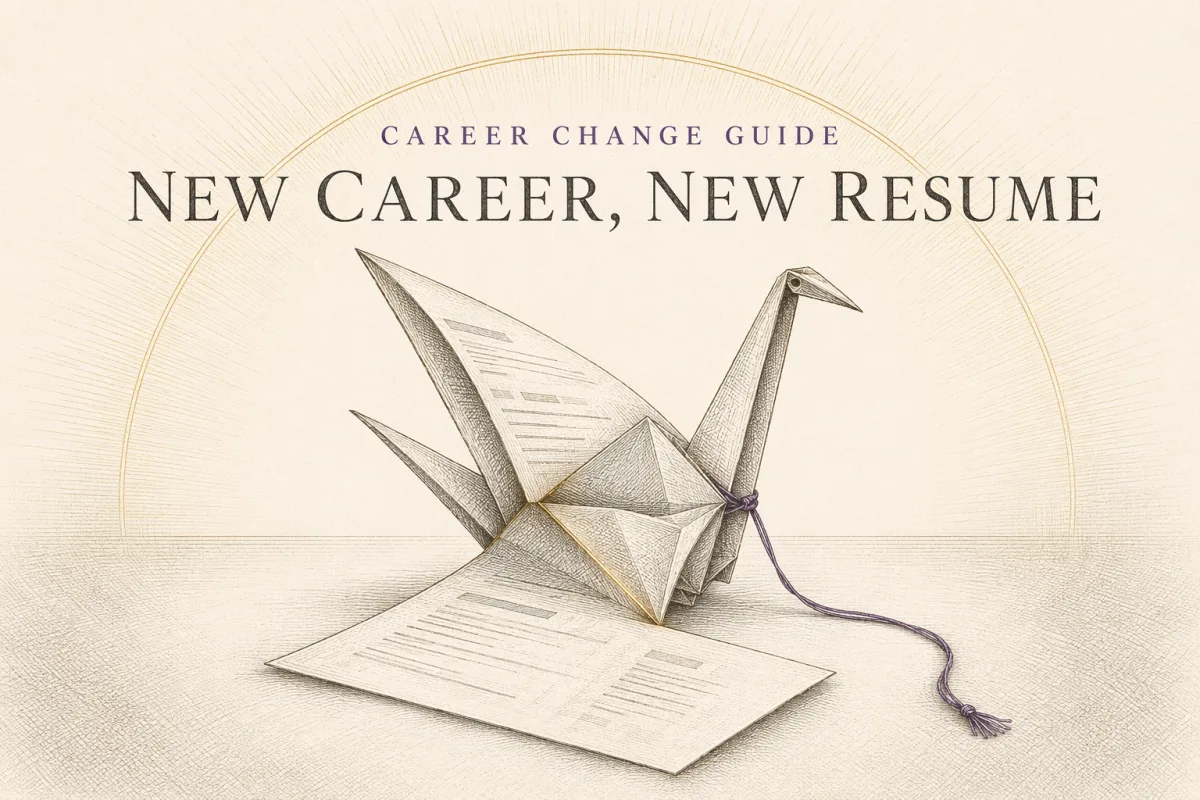
About 6.1 million Americans change careers every year.[1] The biggest hurdle they face? Creating a resume that connects their past experience to new opportunities.
Career changers often struggle with the feeling that their work history doesn't fit. However, a well-crafted resume can bridge any professional gap by focusing on transferable skills and achievements that matter in the new field.
The key lies in strategic presentation. Your past experience contains valuable elements, even if your job titles look nothing like your target role. Learning to identify and showcase these connections turns potential obstacles into compelling qualifications. Understanding what to include in your resume summary helps frame your transition effectively.
This piece covers the essential strategies for building a resume that opens doors to your next career chapter.
Understanding the Career Change Resume
A career change resume differs from traditional formats in both purpose and structure. Rather than showing linear progression in one field, it demonstrates how diverse experiences prepare you for something new.
Why Traditional Formats Fall Short
Chronological resumes work against career changers by emphasizing unrelated job titles. Hiring managers scanning for industry keywords might dismiss strong candidates whose experience uses different terminology.
The disconnect between past roles and future goals requires a format shift. Career changers need resumes that lead with capabilities rather than chronology.
The Functional Resume Approach
Functional or skills-based formats organize information by ability rather than timeline. This structure groups transferable skills under relevant categories, showing employers what you can do instead of where you've worked. For a deeper dive into this format, our skills-based resume guide covers the fundamentals.
Key components of a functional career change resume:
Strong opening summary connecting your background to target role
Skills section organized by relevance to new field
Achievement-focused descriptions with quantifiable results
Brief work history listing positions and dates
Combination Format Benefits
Many career changers find success with hybrid resumes combining chronological and functional elements. This approach highlights transferable skills while maintaining the work history employers expect.
The combination format works particularly well when you have relevant accomplishments scattered across different roles. It allows strategic organization without hiding your experience.
✨ Build a Resume That Gets Interviews
AI analyzes 24 ATS criteria · Tailors your resume to each job · Free forever
Build My Resume Free →★ 4.7/5 on Reviews.io
Identifying Transferable Skills
Every career contains hidden bridges to new opportunities. The challenge is recognizing abilities that cross industry boundaries.
Universal Skills Employers Want
Certain capabilities matter regardless of field:
Communication: Written and verbal skills apply everywhere. Whether you crafted marketing emails or explained technical concepts, these abilities transfer.
Problem-Solving: Analytical thinking crosses all industries. Employers value candidates who can identify issues and develop solutions.
Leadership: Managing people, projects, or processes demonstrates readiness for responsibility in any setting.
Technical Proficiency: Software skills often transfer. Proficiency with data analysis, project management tools, or common platforms adds value across fields. Our technical skills guide explains how to present these effectively.
Mining Your Experience
Look beyond job titles to uncover transferable abilities. Consider:
Projects you led or contributed to
Problems you solved under pressure
Skills you developed through training or self-study
Achievements recognized by supervisors or clients
Document specific examples with measurable outcomes. Numbers and percentages make abstract abilities concrete.
Connecting Past to Future
Research your target role thoroughly. Study job descriptions to understand what employers need, then map your experience against those requirements.
Create explicit connections in your resume. Show how customer service skills translate to client management. Explain how teaching experience prepares you for training roles. Make the bridge obvious for hiring managers.
Writing Your Career Change Summary
Your resume's opening section sets expectations. For career changers, this summary must accomplish more than usual by reframing your entire professional narrative.
The Purpose of the Summary
A career change summary answers the inevitable question: "Why should we consider this candidate?" It provides context before employers review your work history and prevents misunderstanding about your intentions.
This section should be 3-4 sentences maximum. Lead with value, not explanation. Focus on what you bring rather than what you're seeking.
Elements of Effective Summaries
Strong career change summaries include:
Target Role Identification: State what you're pursuing immediately. "Operations professional transitioning to project management" clarifies your direction.
Relevant Qualifications: Highlight transferable skills matching the new field. Connect your background to employer needs.
Value Proposition: Explain why your unique perspective benefits the organization. Different experience can mean fresh solutions.
Examples and Templates
Consider this structure: "[Years of experience] in [current field] seeking [target role]. Proven track record in [transferable skill 1] and [transferable skill 2]. [Key achievement] demonstrating readiness for [target industry] challenges."
Customize for each application. Generic summaries suggest generic candidates. Tailoring shows genuine interest and effort.
Formatting for ATS and Human Readers
Your resume must satisfy two audiences: software systems and human reviewers. Career changers face extra challenges because their keywords may differ from expectations.
Understanding ATS Challenges
Applicant Tracking Systems scan for specific terms. When your background uses different vocabulary, you may never reach human reviewers. Our ATS-friendly resume guide covers essential formatting strategies.
Career changers must translate their experience into target industry language. Research common terms in your new field and incorporate them naturally throughout your resume.
Keyword Strategy
Analyze multiple job postings in your target role. Note repeated terms and phrases. These keywords should appear in your resume where honestly applicable.
Don't stuff keywords artificially. ATS systems have evolved, and human readers will notice forced language. Natural integration matters more than frequency.
Clean Formatting Essentials
Follow formatting basics for both ATS and human readability:
Use standard section headers (Summary, Skills, Experience, Education)
Avoid tables, graphics, or unusual formatting
Choose readable fonts like Arial or Calibri
Save as .docx unless specifically requested otherwise
Simple formats parse cleanly through ATS while remaining easy to scan by recruiters. Understanding the right resume length also helps maintain readability.
Addressing Employment Gaps
Career transitions often involve periods between jobs. Whether due to retraining, caregiving, or job searching, gaps require thoughtful handling.
Honest Presentation
Never hide gaps through deceptive formatting. Experienced recruiters spot manipulation quickly, and discovery damages trust irreparably.
Instead, account for time honestly while emphasizing productive activities during gaps. Training, freelance work, volunteering, and caregiving all demonstrate responsibility and growth.
Skill Development During Gaps
If you used gap time for professional development, highlight it. Courses, certifications, and self-directed learning show initiative and preparation for career change.
Position this development strategically. Relevant training belongs prominently; unrelated activities can appear briefly or in cover letters.
Addressing Questions Proactively
Your cover letter can contextualize gaps before they raise concerns. Brief, confident explanations work better than elaborate justifications. Focus on readiness for the role rather than defending past choices.
Showcasing Achievements Over Duties
Job descriptions list duties. Strong resumes show results. This distinction matters even more for career changers who must demonstrate impact across different contexts.
The Difference Between Duties and Achievements
Duty: "Managed customer accounts"
Achievement: "Managed portfolio of 50+ customer accounts, increasing retention by 25% and generating $150K in upsell revenue"
Duties describe what you did. Achievements show how well you did it. Employers hire for results, not activities.
Quantifying Impact
Numbers transform vague claims into credible evidence. Include metrics whenever possible:
Percentages of improvement
Dollar amounts saved or earned
Numbers of people managed, clients served, or projects completed
Time saved through process improvements
If exact figures aren't available, use reasonable estimates with qualifiers like "approximately" or "roughly."
Selecting Relevant Achievements
Not every accomplishment belongs on a career change resume. Choose achievements demonstrating skills needed in your target role. Past success in unrelated areas wastes valuable space.
Prioritize recent achievements and those showing growth or learning ability. These signals matter especially for career changers.
Education and Certifications
New credentials often support career transitions. Strategic investment in training signals commitment and builds relevant skills.
Highlighting Relevant Training
Place recent, relevant education prominently. Certifications in your target field often belong near the top of the resume, not buried at the bottom.
Include online courses from recognized platforms if directly relevant. Employers increasingly accept these credentials, especially for technical skills.
Downplaying Irrelevant Degrees
An unrelated degree need not dominate your education section. List it briefly without emphasizing coursework unless some classes apply to your new direction.
Your cover letter can address educational background if needed. The resume should focus on qualifications supporting your transition.
✨ Build a Resume That Gets Interviews
AI analyzes 24 ATS criteria · Tailors your resume to each job · Free forever
Build My Resume Free →★ 4.7/5 on Reviews.io
Interview Preparation for Career Changers
Landing the interview is only half the battle. Career changers must prepare to address questions about their transition convincingly.
Anticipating Common Questions
Expect employers to ask why you're changing careers and what qualifies you for the new role. Prepare clear, confident answers that emphasize transferable skills and genuine interest in the field. Our guide on questions to ask during interviews helps you demonstrate engagement and research.
Following Up Effectively
After interviews, timely follow-up reinforces your candidacy. A well-crafted thank-you message can address any concerns raised during the conversation. Review our interview follow-up email templates for guidance on striking the right tone.
Conclusion
Career change resumes require different strategies than traditional applications. Focus on transferable skills, craft compelling summaries, and format strategically for both ATS and human readers.
The core message remains constant: your diverse background is an asset, not a liability. Present it strategically, and employers will see the value you bring from unique experience.
Building an effective career change resume takes research, honest self-assessment, and careful tailoring for each opportunity. AI Resume Builder can help create customized, ATS-friendly resumes that highlight your transferable skills and position you for success in your new field.
Millions of people successfully change careers every year. With the right resume strategy, you can join them.
FAQs
Q1. What is the best resume format for career changers?
Functional or combination formats work best for career changers. These organize information by skills rather than chronology, helping employers see relevant capabilities regardless of job title history.
Q2. How do I identify transferable skills?
Look beyond job titles to abilities used across different roles. Communication, problem-solving, leadership, and project management transfer to most fields. Document specific achievements demonstrating these skills with measurable outcomes.
Q3. Should I address my career change in my resume?
Yes, address it directly in your summary section. A brief statement identifying your transition and connecting your background to the target role prevents confusion and frames your experience positively.
Q4. How do I handle employment gaps during a career transition?
Present gaps honestly while emphasizing productive activities during that time. Training, freelance work, or volunteering show initiative. Use cover letters to provide context without over-explaining.
Q5. Do I need a cover letter for career change applications?
Cover letters are especially important for career changers. They provide space to explain your transition, demonstrate research about the new field, and make connections that resumes cannot convey.
References

Build a Resume That Gets Interviews
- ✓AI scores your resume on 24 ATS criteria
- ✓Tailors it to each job with one click
- ✓Unlimited resumes — free forever